
← Back to Blog
5 small business branding mistakes to fix
May 8, 2026
From blending into your industry to inconsistent visuals across platforms, these five branding mistakes quietly cost small businesses customers.
5 Essentials for a Bulletproof Brand Strategy
To move from generic to unforgettable, every small business needs these five pillars:- A Clear Value Proposition: A one-sentence explanation of why you matter.
- Consistent Visual Identity: A logo, color palette, and typography that never changes.
- A Defined Voice: The specific way you talk (e.g., witty, professional, bold).
- Customer Persona: A detailed profile of exactly who you are selling to.
- A Modern Digital Presence: A website and mobile experience that works flawlessly (see our app showcase for examples).
Summary: Turning Branding Mistakes into Opportunities
Small business branding mistakes are common, but they are also fixable. By avoiding generic designs, ensuring consistency, and prioritizing strategy over pure aesthetics, you can create a brand that doesn't just look good but actually works for your business. Remember, your brand is the bridge between your product and your customer. If that bridge is shaky, no one will cross it. If you're ready to stop blending in and start standing out, Zossoz is here to help. From web design to iOS app development , we build digital experiences that are as unique as your business. Don't let a boring brand hold you back. Contact us today to start building something bold.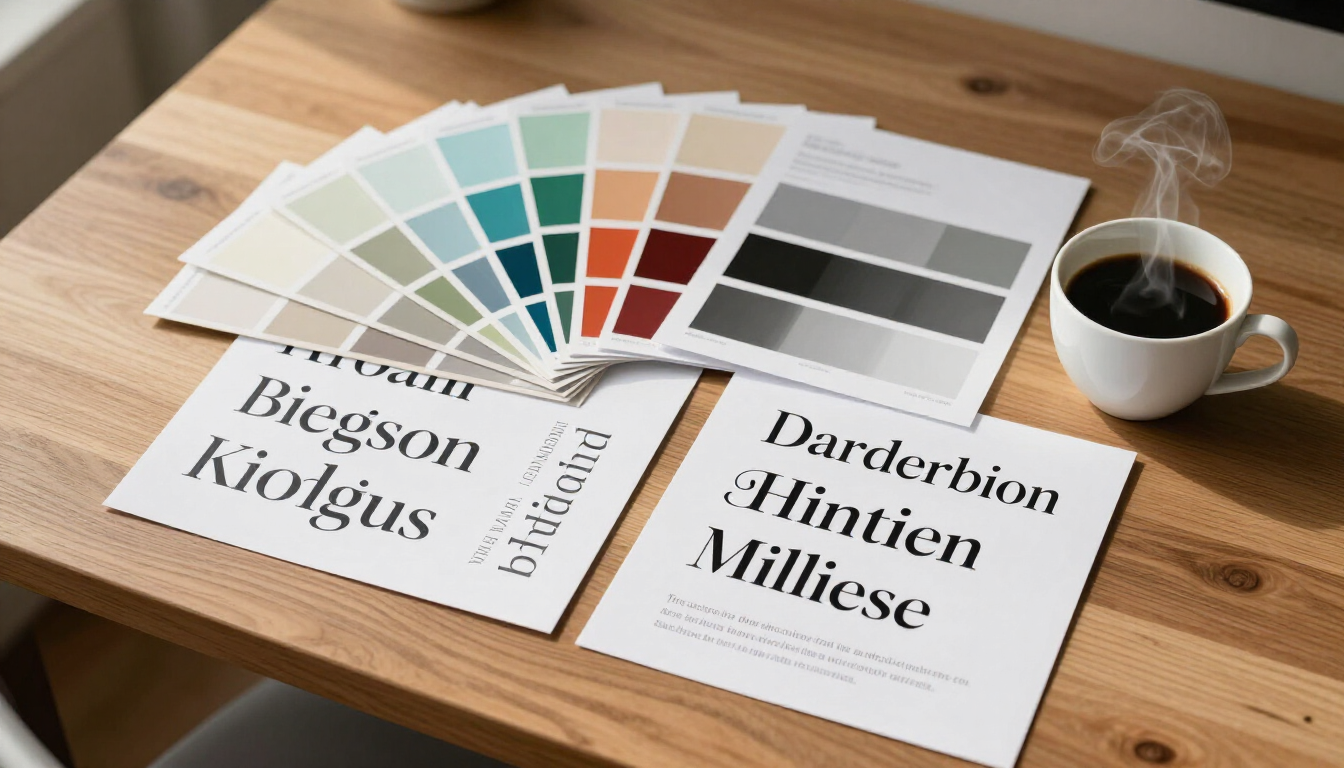
Mistake #4: Trying to Talk to Everyone at Once
If you try to appeal to everyone, you will appeal to no one. Small businesses often fear that narrowing their focus will limit their sales. In reality, the opposite is true. Specificity is the secret sauce of branding. Think about it: would you rather go to a "General Food Store" or a "Sourdough Bakery for People Who Like Crusty Bread"? You go to the specialist because you trust they know exactly what you need. Branding strategy for small business requires you to pick a lane. Questions to help you narrow your focus:- Who is my absolute favorite client to work with?
- What is the specific problem they are trying to solve right now?
- How does my app building expertise specifically help them more than a generic agency?
- What do they hate about my competitors?
Mistake #5: The DIY Trap and the "Good Enough" Mentality
We get it. When you’re starting out, every penny counts. You might think, "I’ll just use a free logo generator and a template for now, and I’ll fix it when I’m bigger." Here’s the catch: your brand is what helps you get bigger. If you look like a hobbyist, people will treat you like a hobbyist. They will haggle over your prices, ignore your emails, and choose the competitor who looks more professional. DIYing your brand often results in a visual identity that is technically flawed (blurry logos, clashing colors) and strategically hollow. Investing in professional consulting early on saves you the massive cost of a total rebrand two years down the line when you realize your initial "good enough" brand is holding you back from six-figure contracts.How can you fix a broken brand identity today?
If you realize you’ve made these mistakes, don’t panic. Branding is an evolution, not a single event. The first step is a brand audit. Look at your blog , your social media, and your website. Ask yourself: if I removed the logo, would I still know this was my business? If the answer is no, it’s time to refocus. Start with your messaging. What do you say? Then move to your visuals. Does it look the way you sound? Finally, look at your execution. Are you delivering on the promise your brand is making?Mistake #1: Being the "Vanilla" of Your Industry
The most frequent small business branding mistake is the "Me Too" syndrome. This happens when a business looks at its three biggest competitors and tries to copy their homework. If you’re a law firm, you use a blue logo with a scale of justice. If you’re a coffee shop, you use a brown logo with a stylized bean. Generic branding is safe, but safe is invisible. If you look like everyone else, the only way a customer can choose between you and the next guy is by looking at the price tag. By blending in, you are effectively telling your audience that you are a commodity. At Zossoz, we specialize in helping businesses stand out by infusing personality into their branding strategy . To fix this, you need to identify your "Unfair Advantage." What do you do that no one else can? Is it your speed? Your wit? Your obsessive attention to detail? Once you find that, lead with it. If you’re a tech startup, don’t just use the same blue and white palette as every SaaS company in Silicon Valley. Be bold. Be different. Be memorable.Mistake #2: The Consistency Crisis across Platforms
Is your brand a shapeshifter? If your Instagram feels like a high-energy party, but your website looks like a 1990s accounting ledger, you have a consistency problem. This is one of the most common branding errors for startups that are growing faster than they can manage. When your brand is inconsistent, it creates friction. Friction leads to doubt, and doubt leads to lost sales. Customers need to see a brand between 5 and 7 times before they remember it. If those 7 times look like 7 different companies, you’re starting from zero every single time.How to maintain brand consistency:
- Create a simple Brand Style Guide (and actually use it).
- Use the same profile picture and handle across all social media.
- Ensure your tone of voice is identical in emails, ads, and blogs.
- Standardize your imagery. Don’t mix high-end photography with grainy stock photos.
- Review your pricing and services pages to ensure the language matches your value proposition.
Are you sacrificing strategy for a pretty logo?
Mistake #3 is prioritizing aesthetics over functionality. A logo is not a brand. A brand is the sum of every interaction someone has with your business. Many founders spend months arguing over shades of turquoise while completely ignoring their positioning or their brand story. A pretty logo on a bad website is like a tuxedo on a pig. It doesn't hide the mess underneath. Your brand needs to solve a problem for your customer. If your visual identity doesn't communicate what you do or why it matters, it’s a failure, no matter how much you like the font. Common small business branding mistakes often include relying on generic visual identities, maintaining inconsistent messaging across platforms, and prioritizing aesthetic trends over a functional strategy. To fix these errors, SMBs must define a unique brand personality, align their visual assets with customer needs, and ensure a cohesive professional presence across their
web design
and marketing channels.
Common small business branding mistakes often include relying on generic visual identities, maintaining inconsistent messaging across platforms, and prioritizing aesthetic trends over a functional strategy. To fix these errors, SMBs must define a unique brand personality, align their visual assets with customer needs, and ensure a cohesive professional presence across their
web design
and marketing channels.
Why is your small business branding failing to connect?
Branding is often treated like the parsley on a plate. A decorative afterthought that looks nice but doesn't actually contribute to the meal. In reality, your brand is the entire kitchen. It is the reason people trust you, the reason they remember you, and the reason they choose you over a competitor who might be cheaper but feels like a corporate robot. Many entrepreneurs assume that if they have a decent product and a functional logo, the brand is "done." This mindset leads to a series of common pitfalls that can quietly sabotage growth. If your brand feels like it's shouting into a void, it’s likely because it lacks the structural integrity to stand out in a crowded market. Whether you're a startup founder or an established SMB, your brand needs more than just a fresh coat of paint; it needs a pulse. Building a brand is about more than just picking a color palette that you personally like. It’s about creating an ecosystem of trust. When your branding is weak, you’re forced to work twice as hard to prove your value. You find yourself competing on price rather than personality, which is a race to the bottom that no one actually wants to win.
Next Step
See where your own site stands.
Run the free Website Teardown and see exactly what your site is missing, no sales call required.